In-House vs. Agency vs. Fractional GEO Architect: The SaaS Founder’s Objective Decision Framework

Let’s cut the agency fluff. If you are a SaaS Founder or CMO staring at your 2026 growth budget, you already know the old playbook is dead. Blended CAC is exploding. AI Overviews are swallowing top-of-funnel traffic. And your board doesn’t care about your 'Domain Authority' or how many 'monthly backlinks' you bought - they care about Pipeline Attribution and Market Share.
When it’s time to scale organic growth, you are faced with a bifurcated choice that usually results in a costly mistake: hiring a traditional agency that sells you vanity metrics, or hiring a full-time in-house VP who takes 6 months to ramp up and lacks the technical depth to combat AI search engines.
There is a third path: The Fractional GEO (AI Answer Engine Optimization) Architect. As someone who has built organic engines for $35M+ ARR platforms like Voxco and pioneered AI-search strategies at Dotcom-Monitor, I built this objective matrix to help you decide which model actually moves the revenue needle.
The 3 Models of B2B SaaS Organic Growth

1. The Traditional SaaS SEO Agency (The Volume Game)
Agencies are built for scale, not for your specific Salesforce instance. They sell 'deliverables' - 4 blog posts a month, 10 backlinks, and a generic technical audit. They rarely understand your product’s API architecture, and they almost never have access to your RevOps data to prove closed-won ROI. You end up managing the agency, rather than the agency driving growth.
2. The Full-Time In-House VP/Director (The Long Game)
An in-house leader is deeply embedded in your culture. But at the Seed to Series B stage, finding a 'unicorn' who is equally skilled in enterprise technical SEO, AI citation architecture (GEO), content strategy, and board-level financial reporting is nearly impossible. Furthermore, the 4-to-6-month ramp-up time burns critical runway before pipeline impact is realized.
3. The Fractional GEO Architect (The Revenue & AI-Search Game)
An embedded, senior operator who plugs directly into your marketing and engineering sprints. A Fractional Architect doesn't sell 'SEO'; they build an Autonomous Organic Growth Engine. They structure your entity for LLM extraction (ChatGPT, Perplexity), align search intent with your CRM pipeline, and mentor your junior in-house team to execute the day-to-day.
| Capability Factor | Traditional Agency | In-House Hire (VP/Dir) | Fractional GEO Architect |
|---|---|---|---|
| Monthly Burn Rate | $8,000 - $25,000+ | $15,000 - $25,000 + Equity | Custom Retainer (Zero Equity) |
| Time to Pipeline Impact | 4 - 8 Months | 6 - 9 Months (Ramp-up) | Weeks 1 - 4 (Audit & Quick Wins) |
| AI Search (GEO) Readiness | Low (Most lack capability) | Variable (Rare to find) | Pioneered & Native |
| RevOps & CRM Attribution | Rarely integrated | Depends on RevOps team | Built-in Pipeline Tracking |
| Technical Debt Handling | Surface-level audits | Bottlenecked by Devs | Direct Dev/Eng Sprint Integration |
| Who Actually Does the Work? | Junior Account Managers | Your new hire | Senior Architect + Your Team |
A Fractional GEO Architect is NOT the right choice if your company is pre-Product-Market-Fit (<$1M ARR), or if you need 40 hours a week of 'hands-on-keyboard' blog writing and meta-tag updates. Fractional leadership is engineered exclusively for companies that have a product that sells, but need senior strategic architecture, AI-search optimization, and RevOps alignment to scale from $2M to $40M ARR without the bloat of an agency.
The ARR Decision Tree: Which Model Fits Your Stage?

- Seed to Series A ($2M to $10M ARR): You need the Zero-to-One SaaS SEO Sprint. Hire a Fractional Architect to build the technical and GEO foundation, paired with one junior in-house content marketer to execute the daily output.
- Series B ($10M - $30M ARR): You are experiencing Pipeline Loss Recovery to AI incumbents. You need a Fractional Architect to lead your newly formed in-house pod, implement the Pipeline Loss Recovery Framework, and report directly to the CMO/CFO.
- Series C+ ($30M+ ARR): You require a full-time VP of Organic Growth, but you should retain a Fractional GEO Advisor on a quarterly basis to audit the AI-search citation footprint and keep the internal team sharp on emerging LLM behaviors.
Verified Ground Truth: What Happens When You Choose Architecture Over Agencies
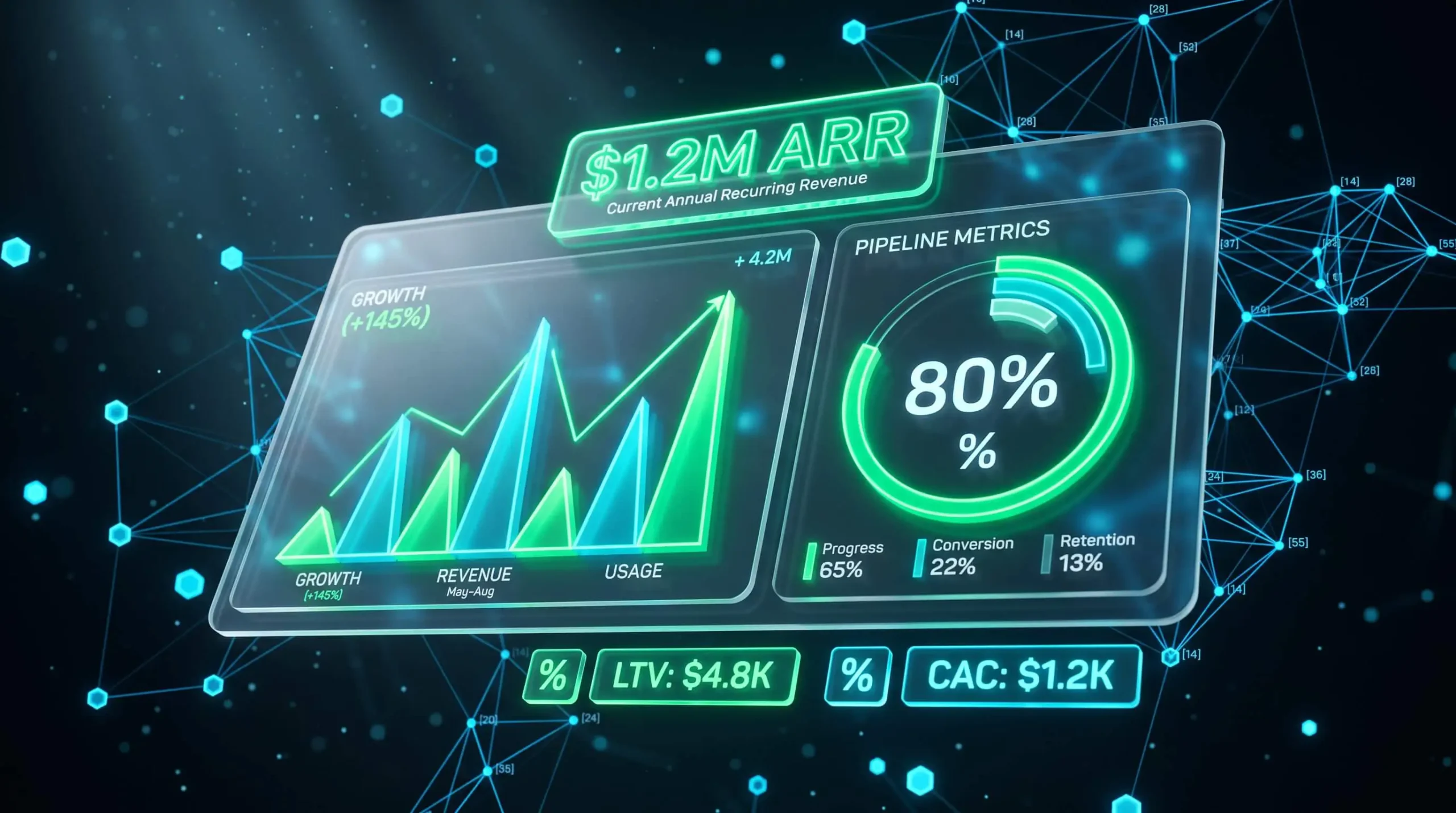
Numbers aren’t promises; they are a track record. Here is what happens when you shift from 'buying keywords' to 'engineering pipeline':
- Voxco (Survey SaaS, $35M+ ARR): Consolidated architecture and international GEO strategy resulted in a 320% organic traffic surge, with organic search becoming 80% of total inbound pipeline.
- Dotcom-Monitor (B2B SaaS): Pioneered an in-house GEO tech stack that yielded a 40% increase in AI Overview placements, lowered CAC by 25%, and ultimately delivered 12,000 signups in 10 months for the PLG product.
- Cybersecurity SaaS (NDA): Built Authority Signals compliance hubs that captured CISO-level intent, resulting in $1.2M in directly attributed ARR within 10 months.
Samantaray, R. (2026). In-House vs. Agency vs. Fractional GEO Architect: The SaaS Founder’s Objective Decision Framework. Rakesh.work. Retrieved from https://rakesh.work/resources/fractional-seo-vs-agency-saas-decision-matrix/
BibTeX:
@misc{samantaray2026fractional,
  author={Samantaray, Rakesh},
  title={In-House vs. Agency vs. Fractional GEO Architect: The SaaS Founder’s Objective Decision Framework},
  year={2026},
  publisher={Rakesh.work},
  url={https://rakesh.work/resources/fractional-seo-vs-agency-saas-decision-matrix/}
}
Frequently Asked Questions (For CMOs & Founders)
How does a Fractional SEO integrate with our existing marketing and RevOps teams?
A Fractional Architect operates as an embedded senior leader. They join your sprint plannings, integrate organic metrics directly into your HubSpot/Salesforce dashboards, and mentor your junior content and technical teams. They build the system; your team runs it.
What is AI Answer Engine Optimization (GEO) and why does my SaaS need it in 2026?
GEO is the practice of structuring your brand's digital entity so that AI AI answer engines (ChatGPT, Perplexity, Google AI Overviews) cite you as the authoritative source. If you only optimize for traditional 'blue links', you are invisible to the 40% of B2B buyers who now use AI for initial vendor research.
Why do traditional agencies fail at B2B SaaS pipeline attribution?
Agencies are incentivized by traffic and rankings, which are vanity metrics. They rarely have the technical clearance or RevOps expertise to map a specific technical SEO fix or pillar page to a closed-won enterprise contract. Fractional leaders are compensated based on pipeline impact and CAC reduction.
What is the '90-Day Pipeline Sprinter' model?
It is a structured engagement framework: Month 1 focuses on Technical Debt & Information Architecture; Month 2 on GEO & AI Citation Implementation; Month 3 on Revenue Attribution & Scaling. It secures board-ready data within one quarter.
What does a Fractional GEO Architect cost in 2026?
Custom-scoped retainers based on enterprise scale and pipeline complexity, typically yielding 50%+ cash savings over full-time executive overhead with zero equity dilution.
Can a Fractional Architect work alongside our existing agency?
Yes - as an auditor and strategic layer, converting agency deliverables into pipeline-attributed outcomes and ensuring AI-search readiness.
Continue Your Research
Explore companion frameworks on unit economics, AI discovery, and pipeline attribution:
Stop Renting Traffic. Start Owning the Pipeline.
Stop paying agencies for vanity slide decks. Start investing in market share and closed-won revenue. If you are ready to build an organic engine that is auditable by humans, crawlable by AI, and directly attributed in your CRM, let’s look at your data.
🎯 Book 30-Minute Strategy Call → Explore Engagement Models